
Our Approach to Tutoring
Our Approach to Tutoring
Which scheme am I eligible for?
Relocations and service changes often disrupt learning, confidence, and routine. To provide stability, two funded tutoring pathways support Defence families across Australia.
ADF Education Assistance Scheme (EAS) Tutoring
Supports students when a posting leads to a school change and extra help is needed.
DVA Tutoring Programs (VCES and MRCAETS)
Provide tutoring when there’s a gap between potential and achievement.
Our tutoring combines structured, educator-led teaching with a focus on student wellbeing. We support students to build confidence and develop independence over time.
We focus on how students learn and approach challenges in high-expectation environments, rather than responding only to short-term pressure and individual assessment results.
A Structured, Educator-Led Model
All tutoring is delivered by experienced educators with strong curriculum knowledge and classroom experience. Educators use professional judgement to adapt teaching in real time, informed by their understanding of each student. Sessions follow a clear structure without relying on scripts, generic programs or fixed pacing.
Curriculum-Aligned, Nationally Delivered Tutoring
We provide online tutoring to students across Australia, aligned with the Australian Curriculum and relevant state and territory syllabuses. Educators adapt instruction to reflect individual school expectations while maintaining a consistent, evidence-informed teaching approach.
What Happens in a Typical Session
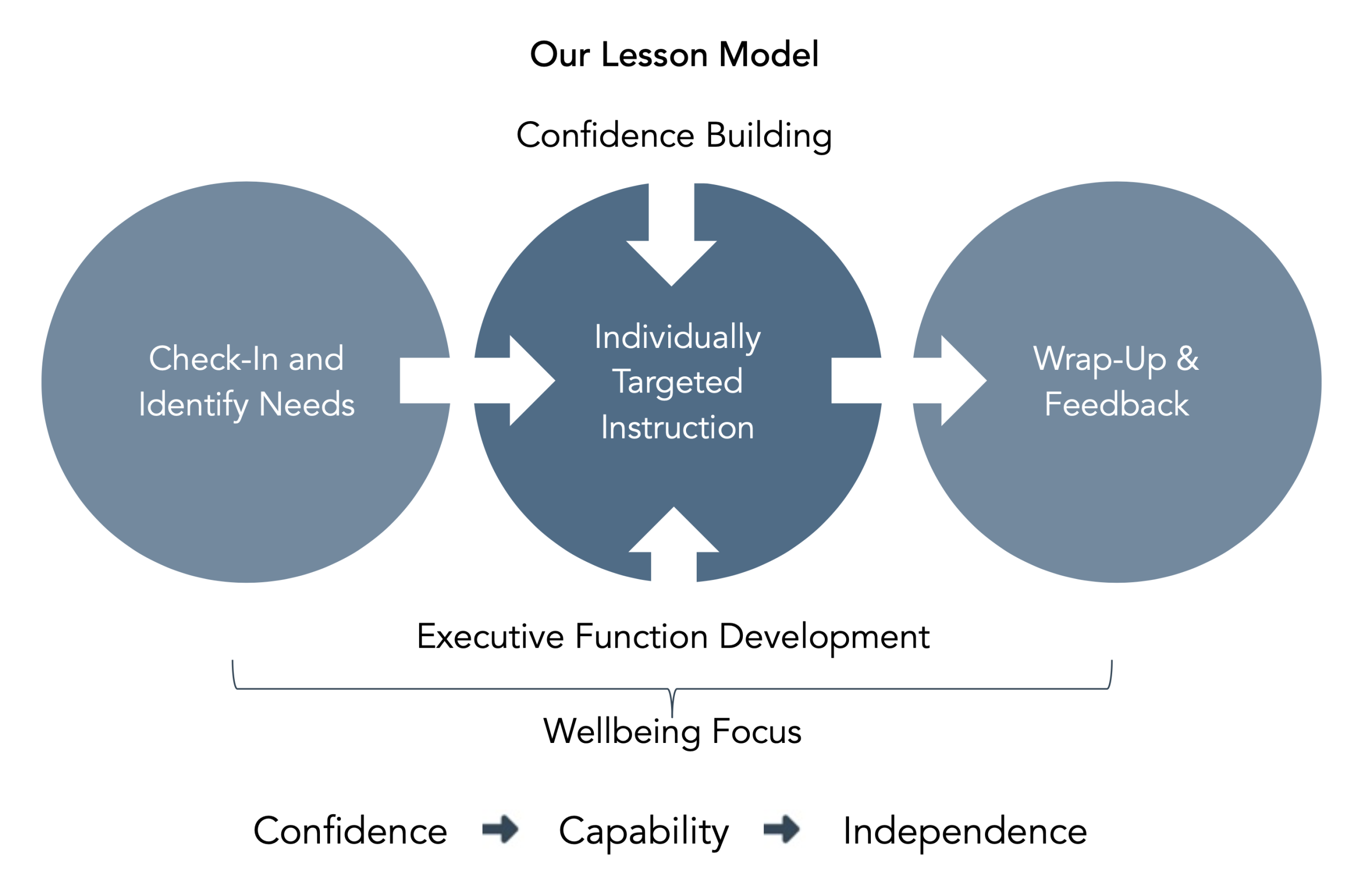
Sessions are carefully planned and follow a clear structure to help students know what to expect and reduce uncertainty. Educators adapt teaching to each student’s needs to support confidence and capability while encouraging growing independence.
Check-in and identifying needs
Educators begin with a plan informed by the student’s learning needs and current priorities. A brief check-in allows them to respond to new challenges, workload or anxiety about schoolwork and adjust the planned focus where needed.
Individually targeted instruction
Teaching is tailored to each student’s learning needs and current curriculum demands. Educators explain concepts, model strategies and guide practice. Support with organisation and planning helps students prioritise their time across the term and break assessment tasks and revision into manageable steps. Students also learn to check their understanding and recognise when to seek support.
Wrap-up and feedback
Sessions conclude with reflection and feedback. Educators help students recognise progress, identify what needs further practice and understand their next steps.
Designed to build confidence and independence.
Our tutoring approach is designed to support confidence, clarity, and independence over time. Student wellbeing supports lasting learning because progress is only sustainable when students feel supported and able to engage. Rather than reacting to short-term pressure or isolated assessments, we focus on how students learn, how they approach challenge, and how steady progress is built in high-expectation environments.
Rethinking Mindsets provides one-on-one online tutoring to students across Australia, aligned with the Australian Curriculum and responsive to state and territory syllabuses. Educators adapt instruction to reflect individual school expectations while maintaining a consistent, evidence-informed teaching approach.
An Educator-Led Approach
Students receive structured, educator-led teaching that supports autonomy over time. All tutoring is delivered one-on-one and led by experienced educators with strong curriculum knowledge and classroom experience. Sessions are responsive and guided by professional judgement, not scripts, worksheets, or generic programs.
Wellbeing as a Foundation for Learning
Student wellbeing is not separate from learning. It is the condition that allows learning to be focused and sustainable over time. When a student feels overloaded, anxious, or caught in avoidance behaviours, progress rarely holds, no matter how capable they are. Over time, this can affect motivation, organisation, and a student’s willingness to persist with challenge.
Our sessions prioritise clarity, manageable next steps, and predictable structure that help students re-engage with learning. Sessions are designed to reduce uncertainty, support emotional steadiness, and help students meet learning demands in a way that feels possible. This requires close attention to how a student starts tasks, responds to mistakes, and manages challenges, guided by professional judgement rather than fixed pacing or pre-set programs. By attending to wellbeing early, we help students remain engaged, build confidence, and meet academic expectations without becoming overwhelmed. This supportive approach creates the conditions for explicit teaching to be retained and applied effectively.
▪ Wellbeing enables progress over time
Learning is most effective when students feel steady and able to engage, supporting sustained progress.
▪ Clear structures reduce overload
Tutoring uses clarity, predictability, and manageable steps so students can re-engage without feeling overwhelmed.
▪ Professional judgement guides support
Educators adjust support thoughtfully rather than following fixed programs.
What Happens in a Typical Session
Capability through appropriate challenge.
Many capable students seek tutoring when learning has started to feel more pressured and harder to sustain. Task initiation may slow, mistakes can feel harder to manage, assessment schedules may be difficult to organise, and persistence can drop as pressure increases.
Students learn best when working within a productive stretch zone where challenge is supported rather than overwhelming.
Our tutoring approach focuses on stabilising how a student approaches learning, then introducing increasing demand in ways that are intentional, supported, and manageable. Sessions adapt as learning needs change, so challenge is calibrated carefully. Students become more willing to engage, persist through difficulty, and recover from setbacks. Over time, confidence, capability, and independence develop together.
What Progress Looks Like Over Time
Progress is observed through changes in how a student approaches learning over time, including:
Why Enrolments are Limited
High-quality tutoring relies on preparation, continuity, and professional judgement over time. When tutoring scales too far, it becomes standardised and less responsive. Limiting enrolments allows sessions to remain consistent, well prepared, and thoughtfully paced. Our educators are practising professionals with active roles in education. Their expertise comes from staying closely connected to classrooms, curriculum, and current teaching practice. Keeping educators actively connected to schools strengthens the quality of our teaching, but it also means availability is intentionally limited.
Is This the Right Fit?
Rethinking Mindsets works best for families who value steady progress and support that prioritises confidence and wellbeing alongside academic growth. It may not be the right fit for families seeking entrance or scholarship exam coaching, fixed one-size-fits-all programs, or high-volume, group-based tutoring. Our approach is designed for families seeking thoughtful, educator-led support that builds confidence, capability, and independence over time.
Confidence Through Appropriate Challenge
Our approach supports growing confidence through appropriate challenge. We help students establish effective approaches to learning, then gradually increase demands in manageable steps, supporting confidence, capability and independence together.
Wellbeing as a Foundation for Learning
Capable students who may feel overwhelmed, anxious or caught in avoidance behaviours can find engaging with learning difficult. We help students recognise and respond to feelings that affect their learning, using personalised strategies, clear expectations and manageable steps to support confidence, independence and wellbeing.
What Progress Looks Like Over Time
Progress is observed through changes in how a student approaches learning over time, including:
Why Enrolments are Limited
We limit enrolments to allow time for preparation, personalised teaching and responsive support. This helps sessions remain consistent, well prepared and thoughtfully paced.
Our educators are practising professionals with active roles in education, bringing current classroom and curriculum experience to tutoring. Availability reflects these commitments and the time needed to support each student well.
Is This the Right Fit for Your Child?
Rethinking Mindsets suits families seeking personalised, educator-led tutoring that supports academic learning alongside confidence, capability and independence. Support may be ongoing or focused on a short-term need, including school assessment preparation.
Entrance and Scholarship Exams
Students sitting entrance or scholarship exams may also benefit from support with underlying skills, practical strategies for managing test-related anxiety and approaching unfamiliar challenges with greater confidence. However, we do not provide preparation tailored to specific entrance or scholarship tests. Families seeking this service would be better suited to a specialist provider.
